Better Drum Posture for Power and Safety:
Most drummers spend hours learning beats and fills, but they often miss one crucial detail that shapes their playing. Bad posture at the drum kit can cause pain, injuries, and put a cap on your progress.
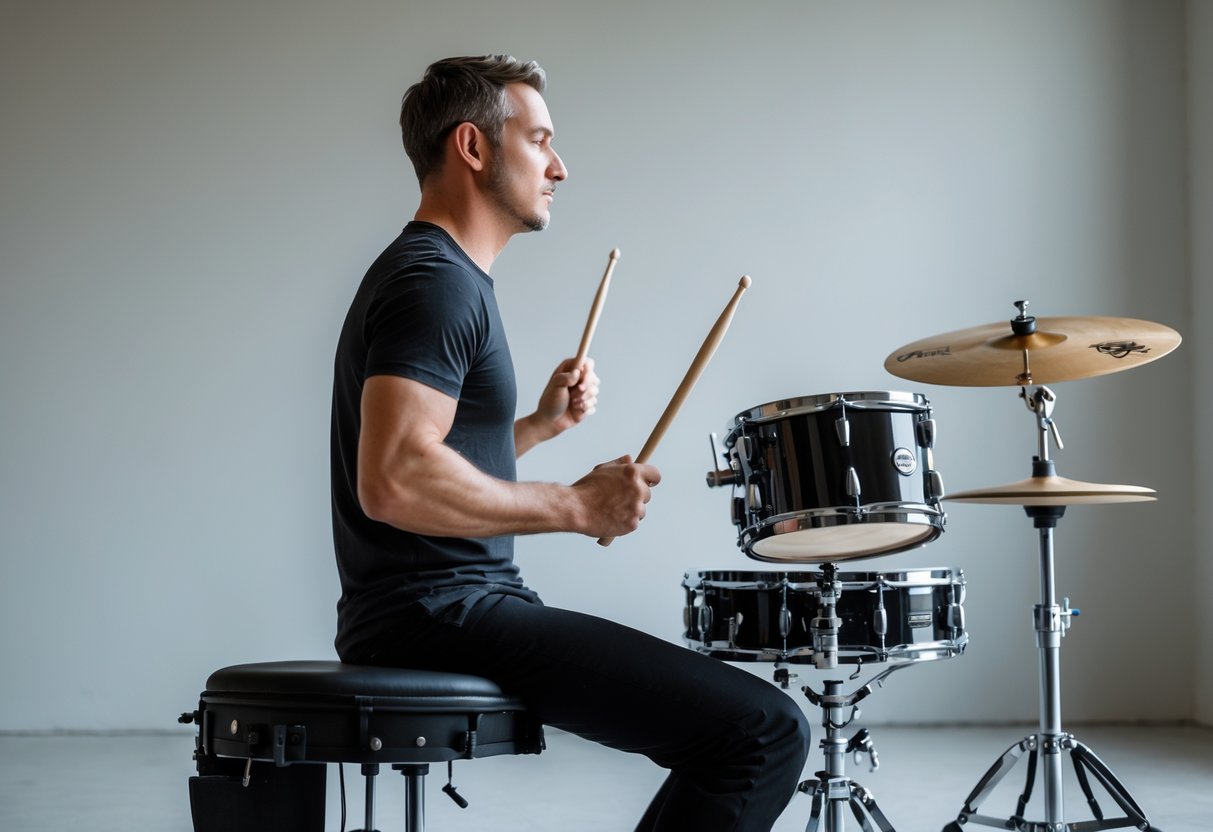
Proper drum posture involves sitting up straight, relaxing your shoulders, and positioning your drums and cymbals so that your arms and legs move naturally. Good posture allows you to play longer without feeling exhausted. It also keeps your back, wrists, and joints happier in the long run.
Setting up your drum kit correctly is the first step. When everything sits in the right spot, your posture takes care of itself. Suddenly, playing for hours doesn’t feel like a chore.
Key Takeaways
- Good drum posture helps keep injuries at bay and allows you to play longer without fatigue.
- The right drum throne height is the starting point for solid posture
- Correct drum and cymbal placement allows for easy movement and puts less strain on your body
The Importance of Proper Drum Posture
Your posture behind the drums impacts how well you play and whether you’ll deal with injuries down the road. The way you sit and move affects your speed, control, and stamina.
Benefits for Playing Performance
When you sit up straight with relaxed shoulders, you get better control over your sticks and limbs. Your arms move more freely, which means cleaner hits and tighter timing.
With good posture, you can reach every part of your kit without stretching or leaning. That’s a game-changer, especially when you’re playing fast.
Stick rebound gets a boost when your posture is solid. Sticks bounce back naturally if your wrists and arms are in a comfortable spot. If you slouch, you end up working harder for the same sound.
Drummers who pay attention to their posture tend to last longer at the kit. Your muscles don’t tire out as quickly, so you can practice or play gigs without burning out halfway through.
Preventing Injury and Fatigue
Bad posture puts pressure on your back, neck, and shoulders. If you slouch or lean too far forward, pain creeps in fast. Over time, this can really cause problems.
Repetitive strain injuries show up when you use poor posture. The same muscles get overworked, and it’s usually the wrists, elbows, or shoulders that pay the price.
The right throne height can prevent many injuries. If you sit too low, your back and hips take the hit. Too high, and your legs and feet can’t work the pedals right.
Keeping your body aligned properly makes long sessions less exhausting. You’ll notice your muscles stay fresher, even after hours behind the kit.
Long-Term Health Implications
Poor drum posture can eventually lead to damage to your spine and joints. If you spend years practicing with bad habits, you might end up with chronic back pain or disc issues that stick around for life.
Nerve compression can develop gradually if you continue to maintain poor posture. This can lead to numbness or tingling in your hands and arms. Sometimes, you might even lose feeling in your fingers.
Bad alignment puts extra stress on your hips, knees, and ankles, which can lead to joint problems or even arthritis down the line.
It’s worth checking your posture regularly and making sure your setup works for you. Taking care of your body now means you can keep drumming for decades.
Fundamental Principles of Drum Posture
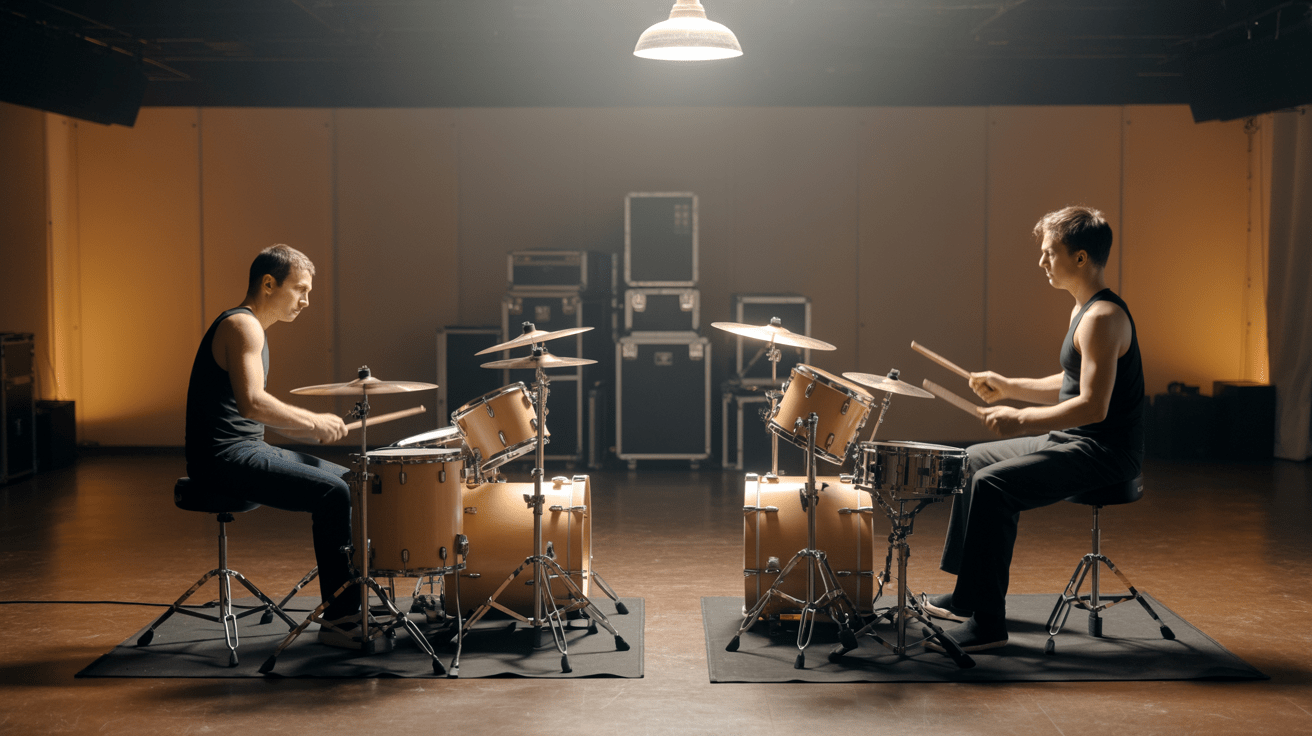
Solid drum posture boils down to three key elements: maintaining a natural spine, keeping your shoulders and arms relaxed, and sitting in a position that allows you to reach your entire kit without strain.
Neutral Spine Alignment
A neutral spine means you keep the natural curves in your back—not forcing it straight or letting it slump. Sit so that your lower back curves in slightly, and your upper back remains tall.
Key spine positions:
- Lower back with a gentle inward curve
- Upper back straight but relaxed
- Headlined up over your shoulders
- Chest open, not puffed out
Some drummers sit ramrod straight, others slump forward. Both cause problems after a while.
Your spine should feel balanced and easy. If you lean forward to reach drums, you lose that balance. Leaning back does the same thing.
With good spine alignment, you play longer and move your arms and legs more freely. Everything just works together better.
Relaxed Shoulders and Arms
Tense shoulders are a drummer’s worst enemy. Your shoulders should rest naturally, not creep up toward your ears or roll forward.
Signs of good shoulder position:
- Shoulders level and even
- No hunching or lifting
- Arms hanging naturally
- Elbows close to your body
Loose arms make everything easier. If your arms feel tight, drumming gets harder and pain creeps in.
Your upper arms should drop down from your shoulders, and your forearms should angle slightly forward. Aim for about a 90-degree bend at the elbow.
It’s easy to tense up, especially during fast or loud parts. Taking a quick break to shake out your arms or shoulders, or just breathing deep, helps a ton.
Balanced Sitting Position
How you sit changes everything. The right throne height and position are key.
Proper sitting setup:
- Thighs sloping down a bit toward your knees
- Feet flat on the floor or pedals
- Weight balanced on both sides
- Throne supporting your sit bones
Keep your snare drum 1-2 inches above your knees. That way, your wrists don’t bend at weird angles when you hit it.
Both feet should reach their pedals without stretching or cramping. The hi-hat and bass pedals need to feel natural under your feet.
Sit toward the front half of the throne for better balance. If you sit too far back, you’ll have to work harder to stay upright.
Setting Up Your Drum Throne
The drum throne is your foundation. The right height, distance, and type of throne make a huge difference in comfort, control, and how easily you reach your kit.
Adjusting Height and Distance
Height adjustment is probably the most important part of setting up your throne. Your thighs should angle down a bit toward your knees when you’re seated.
This position allows your legs to be in the best angle for working the pedals. The snare should be 1-2 inches above your knees if you’re sitting right.
Distance from the kit matters, too. If you sit too close, your legs get cramped. Too far, and you’re stretching to reach everything.
Find the spot where your right foot lands on the kick pedal naturally—no reaching or scrunching. Your left foot should hit the hi-hat pedal just as easily.
Most drummers do well with a 90-degree or slightly wider knee angle. It’s worth fiddling with this until it feels just right.
Choosing the Right Type of Throne
Thrones come in all shapes, and each has its perks. Round thrones give you the most freedom to move, which is great for active playing.
Saddle-style thrones spread your weight more evenly and take pressure off your tailbone. If long sessions leave you sore, these are worth a try.
Backrest thrones offer extra support but can limit how much you move around. They’re best for drummers with back issues or those who mostly play in studios.
The throne’s padding density matters, too. Firm padding keeps its shape longer, while soft padding can flatten out and lose support.
Positioning for Stability
Throne leg positioning keeps you safe and steady. Spread the legs wide enough for a solid base, but not so wide that they get in the way of your feet.
Most thrones let you adjust the legs for different floors or personal tastes. Wobbly thrones are distracting and just plain annoying.
Weight distribution keeps you from tipping. Sit centered, with your weight balanced on both sides of the throne.
All the throne legs should touch the floor firmly. Rubber tips help stop sliding, especially on slick surfaces.
Hand and Arm Placement
Your hands and arms are at the heart of your drumming. Getting your wrists, elbows, and grip right means more power, control, and less risk of injury.
Wrist Positioning
Keep your wrists straight and neutral while you play. Don’t bend them up or down too much—it just adds tension and saps your power.
Key wrist positions:
- Straight alignment with your forearm
- Slight upward angle (about 10-15 degrees) when you strike
- Relaxed between hits
If you bend your wrist up too far, you can pinch nerves and mess with circulation. Bending down too far strains your tendons and makes stick control tricky.
Check your wrist position periodically during practice. Hold your sticks in a way that feels natural and lets your wrists stay loose. You want it to feel effortless so that you can move fast and smoothly.
Elbow Angle
Your elbows should hang naturally at your sides, with a slight bend. Aim for a 90 to 110-degree angle when your sticks hit the drum.
Keep your elbows too close, and you’ll feel restricted. Flare them out too wide, and tension builds up in your shoulders and back.
Proper elbow positioning:
- Natural hang from your shoulders
- 90-110 degree bend at impact
- Shoulders relaxed
Let your upper arms move freely, without lifting them too much or squeezing them in. This gives you a full range of motion and better stick control.
Grip Technique
A good grip strikes a balance between control and flexibility. The fulcrum, where your thumb and index finger meet the stick, shapes how the stick moves and rebounds.
Traditional matched grip elements:
- Fulcrum between the thumb and first knuckle of index finger
- Light pressure from the other fingers
- Stick angle roughly parallel to the floor
The grip should feel secure, not tight. Too much pressure causes tension that creeps up the arm and kills the stick response.
If you grip too loosely, you’ll lose control and probably drop sticks. Let the stick rest in the natural curve of your fingers.
After each strike, let the stick bounce freely. Use gentle guidance from your supporting fingers to maintain stability.
Foot Positioning on Pedals
Where you put your feet on the pedals really changes how comfortable and effective you feel. The ball of your foot should land about two-thirds up the pedal plate.
Keep your legs at a 45-degree angle for balance and control. No need to overthink it, but you’ll notice the difference.
Heel Up vs. Heel Down
Heel-down technique means your heel stays planted on the pedal’s base plate. Your foot rests flat across the pedal.
This works well for lighter playing and gives you good control. The heel-up technique lifts your heel off the pedal, allowing only the ball of your foot to touch.
Heel-up generates more power and speed. Most drummers use a heel-down technique for softer parts and switch to a heel-up technique when they need more volume or speed.
Pick the technique that fits the music you’re playing. Practice both, honestly. Start with heel-down to build control, then add heel-up as your legs get stronger.
Pedal Distance
Put your bass drum and hi-hat pedals right under your feet. You shouldn’t have to reach or stretch.
Your natural leg position indicates where the pedals should be positioned. If pedals are too close, your knees get forced together, which feels awkward and stiff.
If they’re too far apart, you’ll overreach and lose your balance. Sit on your drum throne, let your legs fall naturally, and place pedals where your feet land.
Both feet should touch their pedals without twisting your ankles. With double bass pedals, pay extra attention so the secondary pedal lines up with your left foot.
Balanced Leg Placement
Your legs should form about a 45-degree angle when viewed from above. This gives you stability and lets you reach both pedals easily.
Don’t let either leg angle in or out too much. The left foot controls the hi-hat pedal and should rest flat, not pulling your leg inward.
Keep the knee facing forward. The right foot works the bass drum pedal, and you want to avoid angling it too far outward.
Both feet work together to balance your body. Spread your weight evenly so you’re not leaning or compensating with your upper body.
If your leg positioning feels forced, try adjusting the drum throne height until it feels natural.
Optimizing Drum and Cymbal Arrangement
Comfortable drumming really comes down to having everything within easy reach—ideally 18-24 inches from your center. Keep your body in neutral angles and avoid overextension.
Proper height adjustments and smart placement make a big difference. You’ll play better and avoid strain.
Height and Angle Adjustments
The snare drum sets the foundation for everything else. Set it 1-2 inches above knee level to keep your wrists in a comfortable position.
This height allows you to strike down naturally without bending your wrists in awkward positions.
Optimal Snare Positioning:
- Height: 1-2 inches above knees
- Angle: Slight tilt away from your body (5-10 degrees)
- Distance: Within arm’s reach, no leaning
Set toms based on where the snare sits. Angle higher toms toward you a bit to shorten the stick travel.
Lower floor toms need less angle, but keep them close enough so you’re not stretching. Cymbal height matters a lot for your arms.
Crash cymbals work best at chest to shoulder height. That way, you can hit them quickly without raising your shoulders or straining.
Hi-hat placement depends on your main hand. Right-handed players usually put it just left of center, at a comfortable height.
Maintaining Easy Reach
All your drums and cymbals should sit within that 18-24 inch radius from your center. This keeps movement efficient and prevents awkward stretching.
Crash cymbals deserve extra thought. Place them so your arm swings naturally to hit them. Don’t put crashes too high or far forward—that’s just asking for shoulder tension.
Reach Guidelines:
- Snare: Centered, wrists neutral
- Hi-hat: Left side, easy reach, shoulders relaxed
- Crash: Natural swing distance
- Ride: Right-hand access, no leaning
Don’t ignore the floor tom. It should be close enough for quick fills, so you don’t have to shift your whole body.
Avoiding Overextension
Overextension creeps in when you stretch past your natural range to hit drums or cymbals. That leads to fatigue and, honestly, sloppy technique.
Common mistakes include putting crash cymbals too far forward, floor toms too low or distant, or ride cymbals out of comfortable reach. These setups force you into awkward positions.
If you find yourself lifting your shoulders to reach something, that’s a big red flag. Adjust it.
Prevention strategies:
- Keep elbows at 90-degree angles while playing
- Test your setup while sitting normally
- Bring drums and cymbals closer if you’re stretching
- Make sure both hands can reach their cymbals without twisting your torso
Check your setup regularly during practice. Small tweaks now save you from big problems later.
Warm-Up and Stretching for Better Posture
Good posture actually starts before you sit down at the kit. Stretching loosens tight muscles that might pull your body out of line.
Regular warm-up drills train your body to maintain the correct positions while playing.
Recommended Stretching Exercises
Start with neck stretches to keep stiffness at bay. Tilt your head left and right, holding each side for 15 seconds.
This helps reduce the tension that builds up over long sessions. Shoulder rolls are a must for upper body flexibility.
Roll your shoulders back five times, then forward five times. This loosens the muscles that keep your arms in place.
The doorway chest stretch opens up tight chest muscles. Put your forearm on a door frame, step forward gently, and hold for 30 seconds on each side.
This counters the forward slouch you get from playing. Wrist flexor stretches keep your hands and forearms loose.
Extend one arm forward, palm up, and gently pull your fingers back with the other hand. Hold each wrist for 20 seconds.
Hip flexor stretches help your seated posture. Step into a lunge, push your hips forward, and hold. This helps to loosen muscles that tighten from prolonged sitting.
Drills for Postural Awareness
Mirror practice gives you instant feedback. Set up a mirror next to your kit and watch your posture while you play.
You’ll spot slouching or leaning right away. The wall sit drill builds core strength to support your spine.
Sit against a wall for 30 seconds and play simple patterns on a practice pad. This gets your muscles used to staying upright.
Breath awareness exercises connect your posture to your breathing. Put one hand on your chest and one on your stomach.
Breathe deeply into the lower hand while keeping your back straight. Slow pattern practice lets you focus on form, not speed.
Play basic beats at half tempo and check your posture every few measures. This builds muscle memory for good positioning.
Always check your throne height before you start. Adjust your seat so that your thighs slope slightly downward, with your knees a bit lower than your hips, for a healthy spine.

Correcting Common Posture Mistakes
Poor posture in drumming typically stems from three major issues. Fixing these issues means adjusting your sitting posture, relaxing your muscles, and setting up your kit at the correct distances.
Slouching or Leaning Forward
Many drummers eventually develop a slouching posture over time. That’s when your back curves forward and your shoulders roll in.
The spine loses its natural curve when you slouch. Signs of slouching include:
- Rounded shoulders
- Head jutting forward
- Lower back curved outward
- Chest caved in
Leaning forward puts extra stress on your spine. It makes breathing more difficult and restricts arm movement.
Your neck muscles have to work overtime to hold your head up. To fix this, sit tall with your shoulders back and your chest open.
Pull your shoulder blades down and together. Adjust your drum throne so that your thighs slope slightly downward; this helps keep your spine in a neutral position.
Tension in the Neck and Back
Tight neck and back muscles can mess with your drumming. Tension builds up when you hold stiff positions, often without even realizing it.
Common tension spots:
- Neck muscles from looking down at the drums
- Upper back from hunching
- Lower back pain from sitting wrong
Check your muscle tension every few minutes. Roll your shoulders back to loosen up your upper back.
Do gentle neck stretches between songs. Breathe deeply from your stomach to relax tight muscles.
Take short breaks during practice. Even 30 seconds of stretching can help keep you loose and flexible.
Improper Distance from the Kit
If your drums are too far away, you’ll end up reaching and leaning, which strains your arms, shoulders, and back.
Set them too close, and your movements get cramped. The snare should sit close to your body, allowing you to reach it easily without stretching.
Your arms should have a slight bend at the elbow. Proper distances:
- Hi-hat: Reachable with the left foot flat
- Snare: 2-3 inches from your stomach
- Toms: Within a natural arm swing
- Crash cymbals: Reachable without leaning
Cymbal height really affects your posture. Too high, and you’re raising your shoulders; too low, and you’re hunching over.
Where you put your drum throne changes everything else. Adjust your seat to a closer or farther position to find the perfect fit. Small adjustments can make a big difference.
Adapting Drum Posture for Different Styles
Every drumming style requires its own posture adjustments. Rock drummers need setups that support power and endurance.
Jazz players, on the other hand, tend to excel with arrangements that allow them to play subtle dynamics and execute brush work. It’s worth experimenting until things feel right for your style.
Rock Drumming Adjustments
Rock drumming requires strong hits and often involves long sessions behind the kit. Most rock drummers sit a bit higher than usual to get more power behind each note.
Throne Height: Raise the seat 2-3 inches above your standard height. That extra height gives your legs better leverage for those big hits on toms and cymbals.
Stick Grip: Go with a firmer, matched grip. This helps keep control during loud fills and heavy sections.
Cymbal Position: Keep crash cymbals a bit lower and closer. Less reaching means your arms won't tire out as quickly, and you can recover faster between strikes.
When playing aggressive fills, rock drummers tend to lean forward. Try to keep your back straight, even when things get intense—your spine will thank you later.
Set the bass drum pedal for heel-down technique in most rock styles. That setup gives a solid punch for steady kick patterns.
Jazz and Swing Considerations
Jazz drumming leans on a relaxed posture for smooth dynamics and brush work. The kit should feel comfortable and let you move easily between drums and cymbals.
Seat Position: Stay at regular height or a little lower. That helps with brush control on the snare.
Arm Position: Let your arms relax and use a lighter grip. Jazz often calls for gentle touches and quick moves between limbs.
Hi-Hat Setup: Move the hi-hat in closer. Jazz drummers hit the hi-hat a lot for swing patterns, so easy access is key.
Traditional grip works for jazz. The left hand holds the stick between thumb and index finger, which helps with brush control and rim shots.
Cymbal Angles: Flatten out the ride cymbal more than you would for rock. That makes it easier to get a crisp stick sound and clear bell tones.
Electronic Drum Kits
Electronic drums feel different than acoustic kits. The pads are smaller and closer together, so your posture requires a few adjustments.
Pad Spacing: Since the pads are tight together, scoot your seat in a bit. This way, you can reach everything without stretching awkwardly.
Strike Technique: You don't need to hit as hard on electronic pads. Lighter strokes mean less strain on your arms and wrists, especially during long practice runs.
Monitor Position: Keep your monitor or headphones at ear level. That way, you won't keep craning your neck up or down to hear yourself.
Sensitivity Settings: Tweak the pad sensitivity to fit your playing style. There's no reason to force yourself to hit harder or softer than feels right.
If your kit has an adjustable rack, set tom and cymbal pads at angles that feel familiar from your acoustic setup. Muscle memory matters, even on an e-kit.
Maintaining Proper Drum Posture Over Time
Good posture isn't a one-time thing. Drummers have to check their form regularly and build habits that keep their body in the right spot.
Monitoring and Self-Assessment
Check your posture every 15-20 minutes during practice. It's easy to slip into bad habits without noticing.
Key body points to monitor:
- Keep your back straight—no slouching
- Shoulders stay level and loose
- Wrists line up straight with your arms
- Feet rest flat on the pedals
Mirrors set up next to your kit can help you see what you're doing. Recording your practice on video also shows things you might not feel in the moment.
If your back, shoulders, or wrists start to ache, it's probably time to fix your posture. Pain is your body's way of indicating that something's amiss.
Ask your teacher or even other drummers to watch your posture during lessons. Sometimes, an outside perspective is the only way to catch what's wrong.
Routine Practice Habits
Making good posture part of your daily routine keeps you healthy and sharp behind the kit. Start every practice by checking your setup.
Set your throne so your thighs angle slightly downward. The snare should sit just above your knees. Keep all drums and cymbals within arm's reach—about 18-24 inches from your center.
Essential warm-up steps:
- Adjust throne height and angle
- Make sure drums and cymbals are in the right spots
- Stretch for 5-10 minutes
- Start with slow, controlled movements
Take a 5-minute break every half hour. Your muscles need a little time to rest and reset.
Don't skip stretching. Loosen up your back, shoulders, and wrists before and after you play.
Frequently Asked Questions
Drumming posture combines specific positions, gear adjustments, and targeted exercises. Here are answers to common questions about staying healthy, preventing injuries, and setting up your kit for your specific playing style.
What are the best practices to maintain correct posture while playing the drums?
Keep your back straight and shoulders relaxed while you sit. The throne should allow your spine to remain natural, not forced into unnatural angles.
Feet stay flat on the floor or pedals. Let your arms hang naturally, elbows close to your body. Try to keep your wrists straight and avoid bending them up or down as you play.
Set the snare drum just above knee height. Place everything else so you can reach it easily—no overextending.
Take breaks often. Stand up and stretch every 30-45 minutes if you're practicing for a long time.
How does proper drumming posture influence playing technique and the prevention of injuries?
Good posture lets you move smoothly around the kit. You'll waste less energy and play faster and more accurately.
Keeping your spine lined up prevents back pain and muscle strain. Straight wrists help avoid repetitive stress injuries.
Poor posture just makes your muscles work harder than they need to. That leads to getting tired faster and losing stamina during a gig.
When your body moves naturally, you get better stick control and can play with more power and finesse.
What are the essential adjustments to make for achieving ideal drum throne height and angle?
Set your throne so that your thighs slope slightly downward toward your knees—typically 5-15 degrees below horizontal.
Your knees should bend somewhere around 90-110 degrees when your feet are on the pedals. Hips should sit a bit higher than your knees.
Pick a throne that's firm but not rock hard. You want a solid base that doesn't wobble when you play hard.
Most drummers do better with round thrones than bicycle seats. The seat should spread out your weight evenly.
How should female drummers adapt their posture to accommodate for physiological differences?
Female drummers sometimes need to raise the throne a bit higher to match longer torsos. That keeps arms in a good spot for playing.
If your hips are wider, adjust toms and cymbals to fit your reach. Bring things in to match your natural swing.
Smaller frames usually work better with everything a little closer. That way, you don't have to stretch too far for anything.
If needed, tweak the snare's height or angle for comfort. The main thing is to keep wrists straight and reach easy.
What tips can beginners follow to develop and maintain good drumming posture from the start?
If you're new, focus on posture before speed. It's way easier to build good habits now than fix problems later.
Practice in front of a mirror when you can. Seeing yourself helps catch posture issues early.
Keep early practice sessions short—15 to 20 minutes is plenty. Your muscles need time to adjust.
Lessons with a good teacher are extremely helpful. They can spot things you might not notice on your own.
Are there specific exercises that can improve a drummer's posture and comfort during long sessions?
Try neck rolls and shoulder shrugs to shake off tension between playing. They really help keep your upper body from getting stiff.
Back extensions work wonders for spine mobility. A few gentle twists can also keep your back feeling loose.
Core exercises, such as planks or simple crunches, help maintain good posture during extended periods.
Wrist circles and finger stretches are excellent for maintaining the health of your hands. I like to do them both before and after playing.
Hip flexor stretches break up the effects of all that sitting. Calf raises get your blood moving, which matters more than you'd think during long practice sessions.
DISCAIMER
This document is provided for general information purposes only and should not be relied upon as providing legal advice, technical, or specific operational guidance to the reader, whether as to the practices described in the document or the applicable legal requirements and regulations. Percussion Pros.com expressly disclaims any responsibility for liability arising from or related to the use or misuse of any information in this document.